Government
02:49 PM | 24 Jun 2026
Salam: I only ask Hezbollah to fulfill its obligations
Fady Mahouly
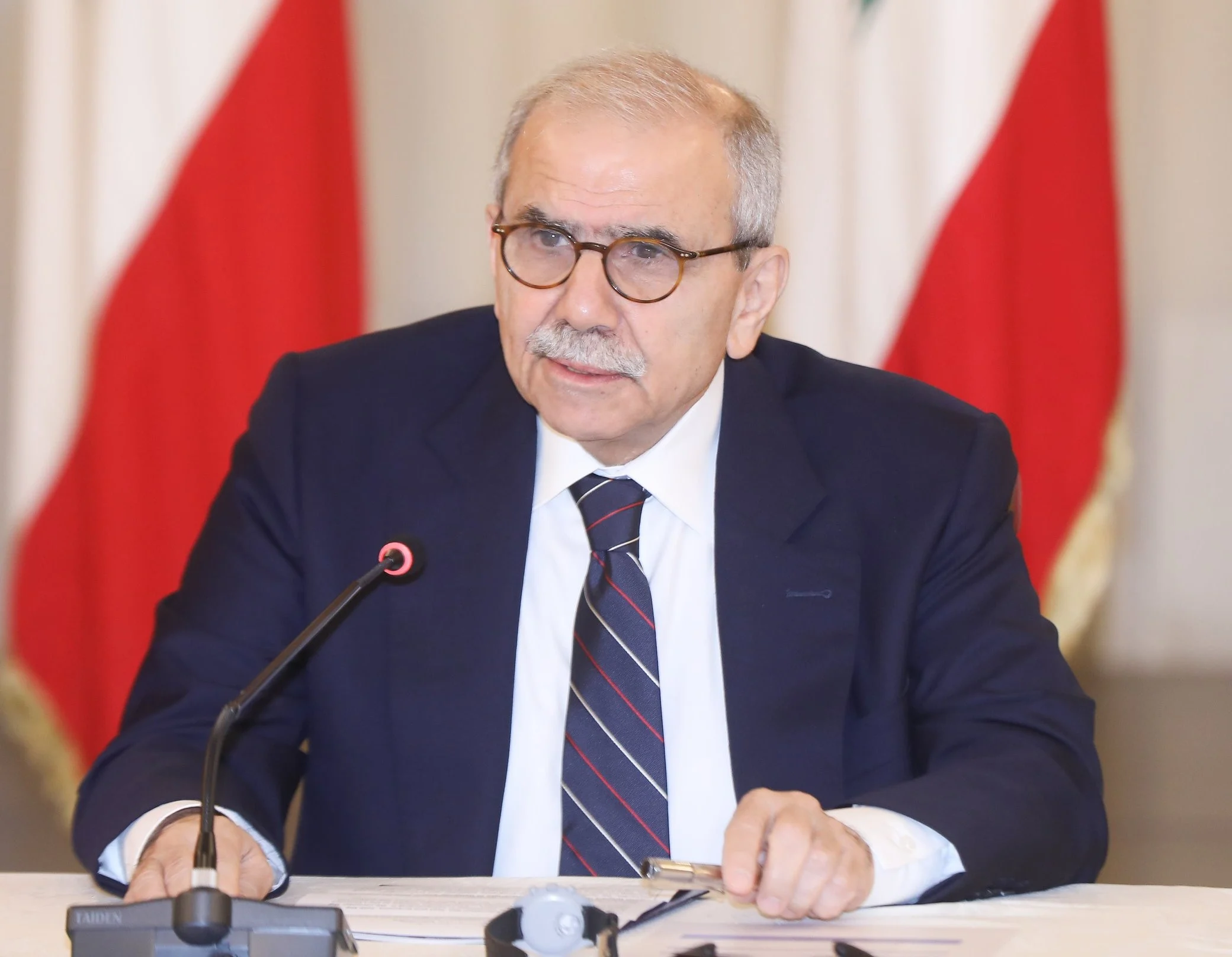
Prime Minister Nawaf Salam announced that Lebanon was placed in the image of the cell that was formed in Switzerland, saying: “We are part of it, and its goal is to establish a ceasefire, but Washington’s path is different from it.”
He said while receiving a delegation from the Press Syndicate, headed by Captain Awni Al-Kaaki: “We went to the negotiations in Washington because it is the least expensive path for Lebanon. Will we reach an agreement? No one knows in advance the outcome of any negotiations. But we know very well what we want from them, which is complete Israeli withdrawal.”
He added: "We will not accept five points or two points remaining. We also demand the release of prisoners and an end to the issue of the outstanding points on the border. On the other hand, we appreciate that the Israeli side proposes security arrangements, and we will discuss what is acceptable and what is unacceptable. I am not pessimistic."
Salam stressed that “there is an indisputable issue,” saying: “The Taif Agreement talks about Israeli withdrawal, reforms, as well as extending state authority. We are 36 years behind in extending state authority and on a number of reforms, since the approval of the Taif Agreement.”
He added: "I only ask Hezbollah to fulfill its obligations. It committed itself, through the 2006 government of which it was part, to implementing Resolution 1701, which stipulates the necessity of completing the extension of state authority over its entire territory and implementing the Taif Agreement, and most importantly, to making the area south of the Litani a weapon-free zone. It also committed again in 2024, in the government of Prime Minister Najib Mikati, through the Cessation of Hostilities Agreement, to exclusivity of weapons. The agreement exclusively specified the six parties authorized to carry Weapon.
He continued: "We are not restricting weapons to please Israel. This is an independent and agreed-upon Lebanese issue, and we have delayed implementing it for a long time, that is, since the approval of the Taif Agreement."
Salam pointed out that “the Taif Agreement is a complete basket, but it was implemented selectively,” pointing out that “its importance is that it renewed Lebanon’s social contract and ended the war, but administrative decentralization was not implemented, nor was the independence of the judiciary achieved. As for the issue of abolishing political sectarianism, it is stipulated as a fundamental national goal that requires work to achieve, and it requires the establishment of a national body charged with developing plans and studies to abolish it according to a phased plan, which is what was stipulated in Article 95 of the Constitution. Constitution.
He said: "We must complete the implementation of the Taif Agreement, correct what was implemented in contradiction to its text, work to fill the gaps that appeared in its implementation, and prepare to develop it whenever the need arises."
He added: “We have negotiated, from 1975 until 1989, unfortunately, sometimes with fire and weapons, and we went through dozens of rounds of political negotiations leading to the Taif Agreement, so we do not need new negotiations to implement the agreement. There are issues that are discussed in the House of Representatives or the Council of Ministers, that is, in the institutions whose role we are working to restore, and among these matters is the draft administrative decentralization law and other draft reform laws, but we will not negotiate to implement the Taif Agreement.”
On the subject of the end of the mission of international forces in the south, Salam said: “We still see a need for the presence of an international force in the south to carry out three basic tasks: monitoring, reporting, coordination and communication. Even if we reach an agreement with Israel, we will still need this role, given the existing history between us.”
He added: "The Secretary-General of the United Nations presented three options, while the decision is up to the Security Council. These options are subject to modification in accordance with what we may reach in the negotiations, and according to the military arrangements that will accompany the Israeli withdrawal."
← Previous article
“We are ready to cooperate.” Qalibaf: The importance of a ceasefire in Lebanon as well as in Iran
Related Articles
Closing public administrations, institutions and municipalities on the Prophet’s Birthday
Salam: The absence of the Minister of Defense will not be long... and no one fishes in troubled waters
Al-Hajjar: The government stands with the military establishment