Sports
09:35 PM | 30 Jul 2026
Europe decides to boycott the World Cup in response to Infantino's plan
Fady Mahouly
The European national associations that are members of the European Football Association (UEFA) decided to boycott all tournaments organized by the International Federation of Association Football (FIFA), in protest against its plan to sell a share of the commercial rights to the World Cup and the future of its tournaments to private investors.
The decision came during a virtual meeting that included the 55 federations under the UEFA umbrella, where it was unanimously agreed to reject the project, before the European Union confirmed the decision in an official statement in which it stressed that all its members “categorically and unanimously reject FIFA’s proposal to transfer ownership of shares in the World Cup and other tournaments to private investors.”
The statement explained that European teams will not participate in any tournament organized by FIFA as long as the project remains in place, unless it is completely withdrawn and binding legal guarantees are provided that ownership of FIFA tournaments will not be offered to private investment in the future.
The decision means that the first tournament that may be affected by the boycott will be the Women’s World Cup in Brazil next summer, followed by the 2030 Men’s World Cup scheduled for Spain, Portugal and Morocco, if the crisis continues without a settlement.
Last Tuesday, FIFA announced the establishment of a new company called FIFA Forward Enterprise, which will manage the commercial rights for its major tournaments, most notably the World Cup and the Club World Cup, with FIFA retaining the majority and control of the company.
The project includes selling up to 21 percent of the new company to investors, with the aim of raising $4.2 billion, which will be pumped into a new financing program to distribute funds to member national federations.
The project requires the approval of the 211 member federations of FIFA, in addition to the International Federation Council, before September 19, so that the funds become available in early 2027.
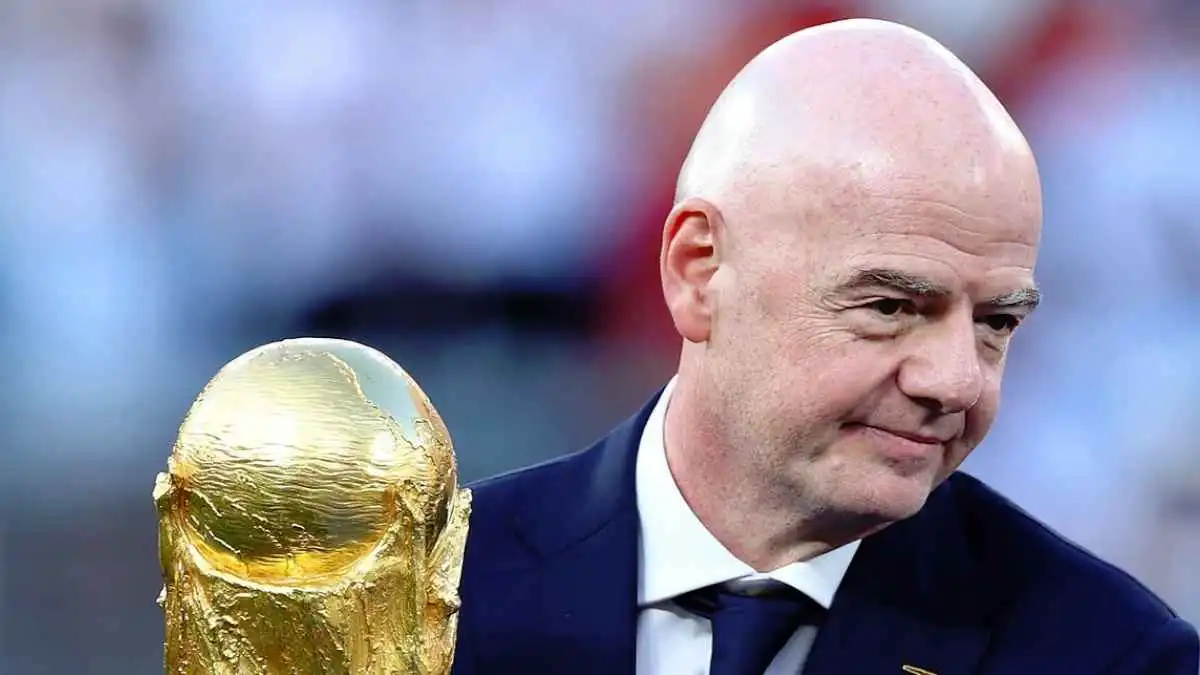
FIFA President Gianni Infantino defended the initiative, considering that developing the commercial aspect represents the “next natural step” for the development of football, stressing that the International Federation will maintain its role as the governing body of the game without any external interference.
UEFA’s statement was strongly worded, stressing that the World Cup “is not an investment product,” and that it is a global sporting legacy built across generations of players, fans, and teams, and no part of it may be given up to investors.
He added that the entry of investors into ownership of FIFA tournaments will permanently change the nature of football, because decisions related to the international calendar, the format of tournaments, and the future of the game will become linked to shareholders’ returns rather than the interest of football.
The statement stressed that Europe will not grant this model any legitimacy, stressing that “some things are too important to be sold, and the World Cup belongs to football and will remain so.”
UEFA also criticized the way the project was managed, considering that FIFA secretly formulated the plan and pushed it towards adoption without any real consultations with the continental and national federations, describing this as a “grave leadership failure” and “an attempt to impose a fait accompli.”