Searching for an international force... Berri warns of an international vacuum in the south
Fady Mahouly
18:01 · 29 August 2026
1 min read

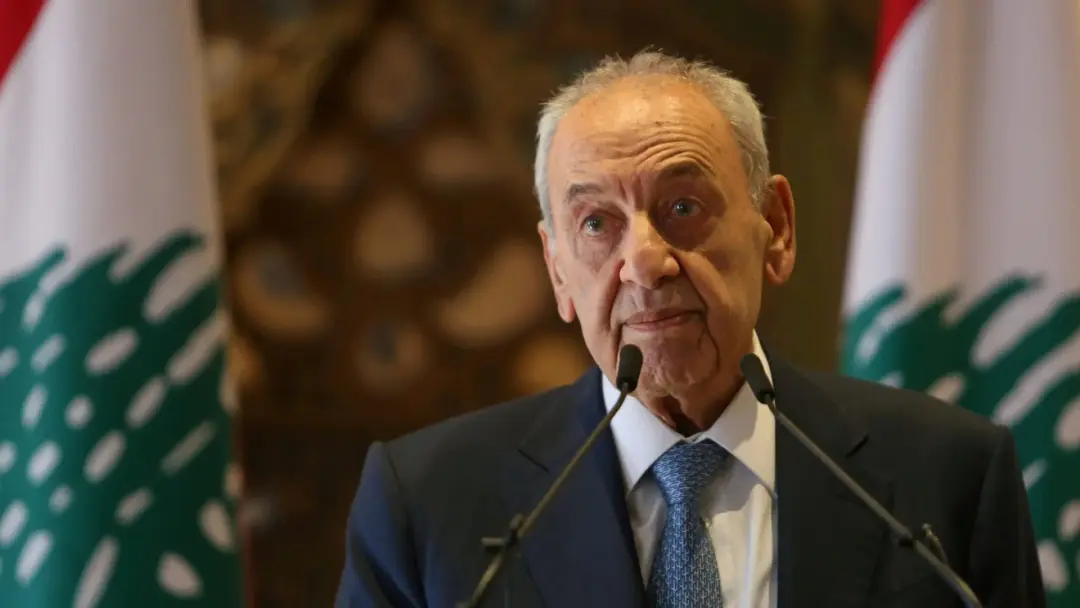
House Speaker Nabih Berri confirmed that the United States’ insistence on refusing to renew the International Emergency Forces (UNIFIL) forces the search for an alternative UN force that enjoys European-American consensus and is deployed in southern Lebanon under the UN flag.
Berri stressed that the absence of an alternative would lead to the loss of the legal document to maintain the international authority and its role in supporting the Lebanese army to extend the state’s sovereignty over its entire territory, conditional on Israel’s withdrawal to the international borders.
He considered that the bilateral agreements between Lebanon and Israel do not constitute an alternative to the international presence in the south, in light of Israel’s refusal to implement what was reached under the “Framework Agreement” under American sponsorship, especially with regard to the first experimental phase and the formation of a mechanism to verify the deployment of the army.
Berri indicated that, despite his rejection of the agreement, he had previously proposed expanding the experimental phase to include the judiciary, according to the administrative divisions of the south, instead of limiting it to the occupied western town of Zawtar, and including liberated towns to it.

← Previous article
"The Progressive" condemns denying As-Suwayda students access to examination centers