08:00 AM | 03 Apr 2026
"Nassar launches an attack on Iran: The ambassador has lost his legitimacy and his country is an aggressor against Lebanon."
Fady Mahouly
|
Source: mtv
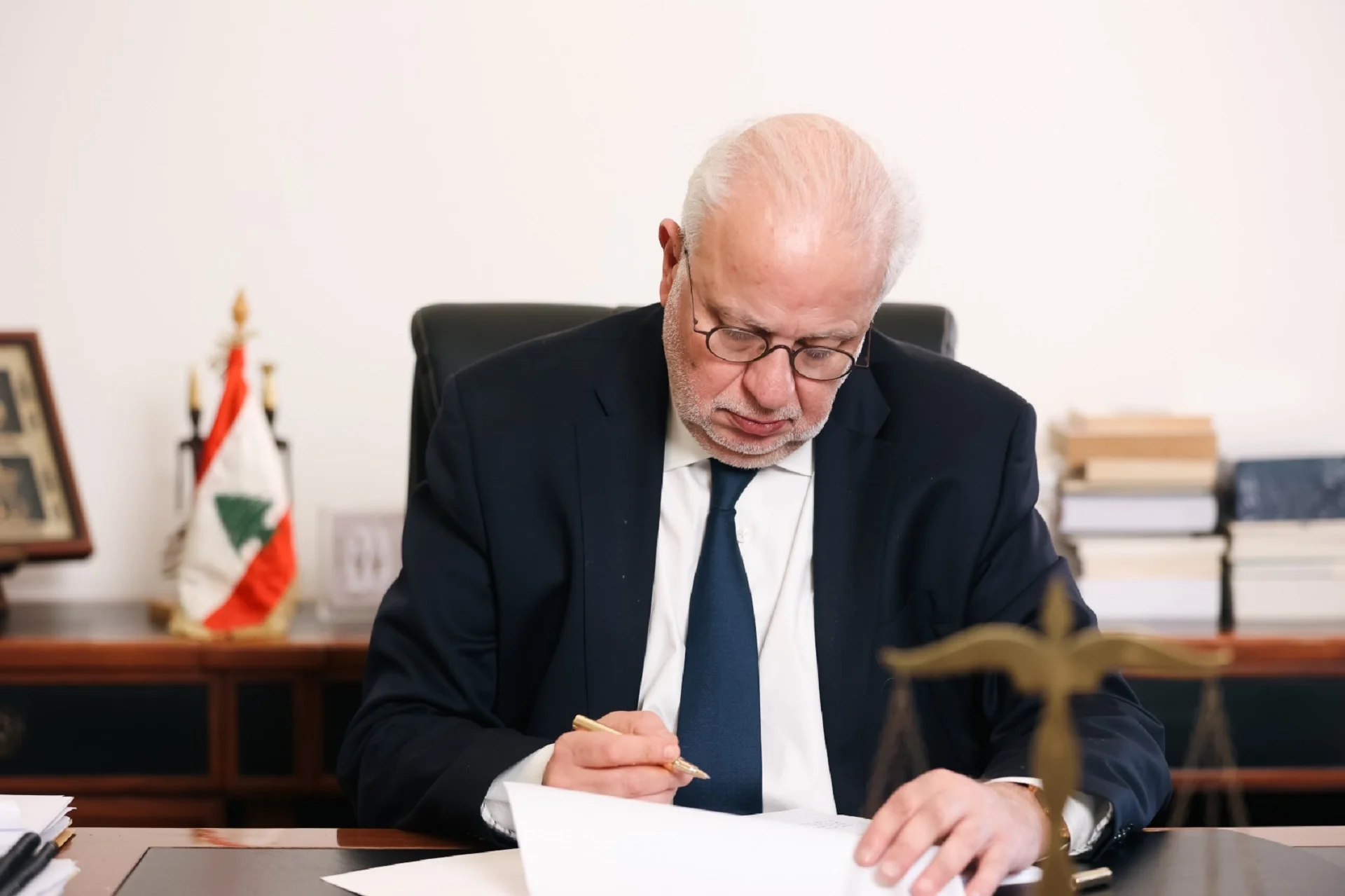
In a television interview, Minister of Justice Adel Nassar stressed the necessity of securing safe passages to the border villages whose people decided to remain on their land despite all the dangers, explaining that he raised this issue in the Council of Ministers and with a number of ambassadors.
He expressed his appreciation for the people of the steadfast Christian villages in southern Lebanon, pointing out that they are afraid to leave their homes for fear of not being able to return to them, describing their position as very courageous.
He also paid tribute to the Vatican ambassador for his efforts, as well as to France, indicating that these people are not abandoned to their fate.
Regarding the scene of the army’s repositioning in the villages of the south, he made it clear that the state exists, and that the war is not a Lebanese decision, but was imposed on us.
Regarding Prime Minister Nawaf Salam’s betrayal, he said: “The government is one year old and President Salam has positions that he can attest to, and his accusation of betrayal does not deceive anyone.”
In response to a question, the Minister of Justice considered that the negotiating papers are not available as long as the party keeps its weapons, and this prevents the state from playing an effective diplomatic role.
He pointed out that choosing the military arena serves Israel, while the first condition for diplomacy is complete sovereignty, stressing that the war does not end except through diplomacy, and the latter remains stalled as long as the party clings to its weapons.
He pointed out that the decisions taken by the Lebanese state are not to be ashamed of, and that the government’s decision is final and irreversible, considering that Iran is an aggressor against Lebanon.
He explained that the army carried out its mission in the south based on the information it received from the mechanism, stressing that Lebanon's success requires not sliding into a partisan or sectarian conflict and maintaining the confrontation with the party rebelling against the state.
While he asked: Where is the balance of terror? Where is the equal opportunity? He stressed that the solution lies in handing over weapons and stopping the rebellion.
Regarding the issue of the Iranian ambassador, he made it clear that the ambassador’s behavior is a challenge to Lebanon and is completely rejected, and that his legitimacy has been stripped from him and he cannot act as an ambassador.
He pointed out that the Lebanese judiciary will prosecute anyone who carries a weapon belonging to the party, and that files and prosecutions are continuing and there will be arrests in this matter.
Regarding the decision issued by the Military Court (regarding the arrested members of the party who were released in exchange for financial bail), he explained that he used his powers when he received suspicions about the trial procedures, so he requested that the file be transferred to judicial inspection, stressing that his intervention did not affect the ruling.
In the case of Fadi Boudia, he stressed that he does not accept any situation that targets university students in Lebanon from different sects, and that he did not ask the Public Prosecution to take action.
Regarding the Beirut Port explosion file, he indicated that Judge Al-Hajjar will retire after 20 days, explaining that the judicial timing is not related to the political or media timing and that there is seriousness in following up on the file, saluting the families of the victims for their patience.
As for the Syrian detainees, he explained that there is an agreement signed between the two countries, which was unanimously agreed upon within the Council of Ministers, and stipulates that the convict completes his sentence in Syria, with the obligation to submit a report on the status of each convict. This agreement was concluded prior to the contact that took place between President Ahmed Al-Sharaa and Phalange Chief Sami Gemayel.