Jumblatt: I will not be part of a coalition to drop the framework agreement
Fady Mahouly
15:16 · 02 July 2026
3 min read
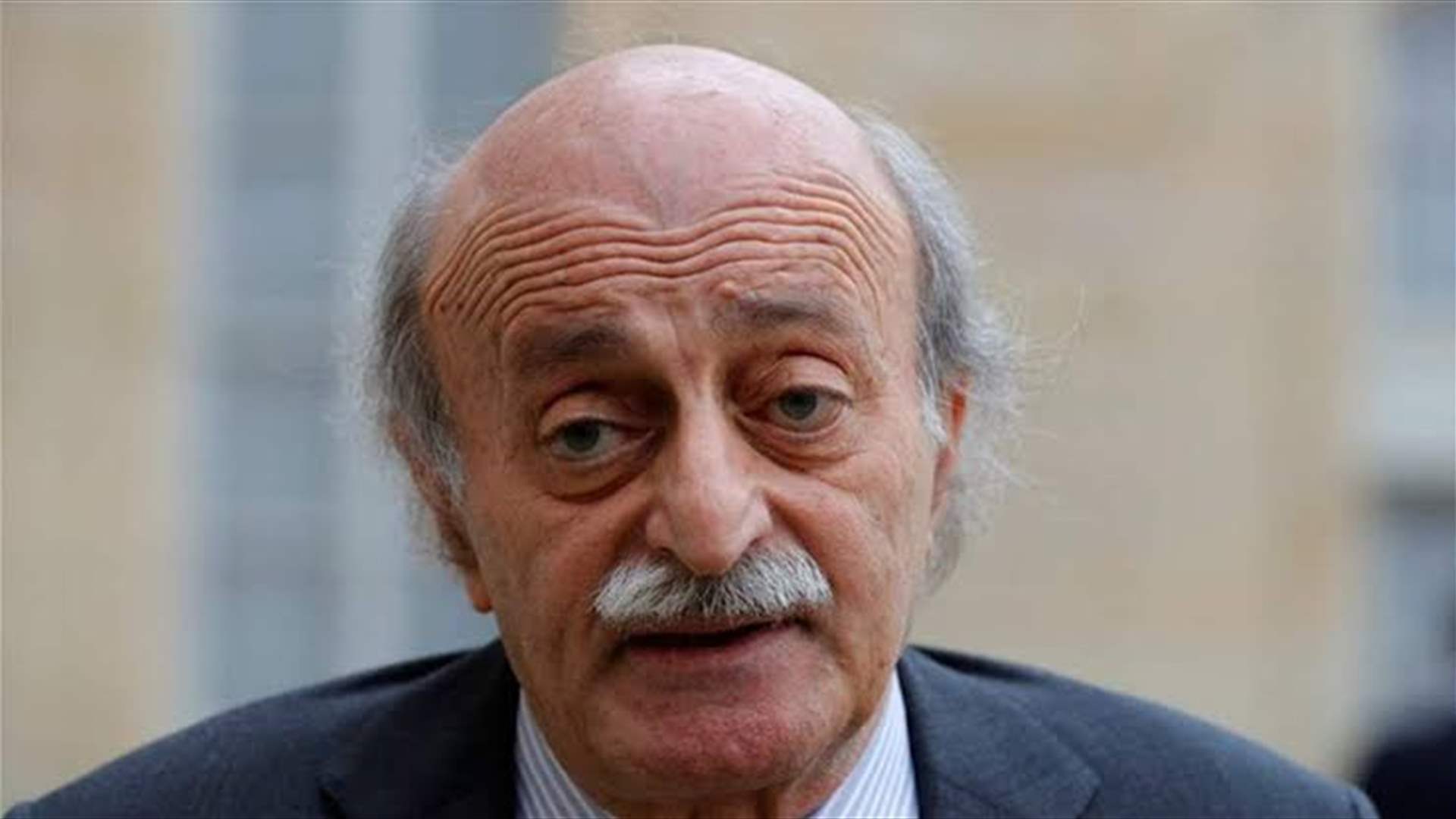
Former head of the Progressive Socialist Party, Walid Jumblatt, saw the agreement as a “wrong step for the Lebanese state,” and called for it to be reconsidered.
He said in an interview with the newspaper "L'Orient Le Jour", "The framework agreement concluded last Friday between Lebanon and Israel will not be applicable," considering that the agreement is a wrong step for the Lebanese state. This is a position that was greatly welcomed by Parliament Speaker Nabih Berri. This brings to mind what happened on May 17, 1983, when an alliance that included Berri and Jumblatt, along with Syria led by Hafez al-Assad, succeeded in overthrowing the Lebanese-Israeli agreement at the time. However, Jumblatt confirmed He does not want to repeat that scenario.
He added, "This proves that some of the provisions of the agreement place the Lebanese army at the mercy of the Israeli army, without any clear date for withdrawal, noting that the word 'withdrawal' itself did not appear even once in the text of the agreement. As for Nabih Berri, I do not know what his intentions are." But we will not be part of a political coalition to overthrow the agreement, nor will we support it. This is our principled position
He continued, "We are not facing a new version of the May 17 agreement. However, there are some provisions that raise problems, especially Article 13, which prevents Lebanon from prosecuting the perpetrators of war crimes and child killers before the judiciary. During the negotiations, the Armistice Agreement that has regulated relations between Lebanon and Israel since 1949 should have been adhered to. But American pressure was exerted, in addition to the presence of a Lebanese lobby in Washington, pushing towards this type of gradual barter, even though it conflicts with Lebanon's interest. And the matter is increasing." It is dangerous when we see Israeli Prime Minister Benjamin Netanyahu confirming daily that he will not withdraw from Lebanon. Therefore, this agreement was a wrong move by the Lebanese state, and I am ready to help it if it decides to reconsider it, but it seems to me that we are still far from that, as some parties seek to mobilize the broadest possible support to proceed with the implementation of the agreement.
He considered that "the negotiations between Iran and the United States are still very ambiguous, and we must focus on the Lebanese track and the principle of reaching a bilateral agreement under the auspices of the United Nations."
Regarding Syria's role in the Lebanese file, he said: "Some Lebanese leaders are not yet convinced of the importance of establishing good relations with Damascus. Today's Syria is not yesterday's Syria, and we must realize that. We must also understand that Bashar al-Assad is no longer in power, and therefore this page must be turned and normal political and economic relations must be established with the new Syria. I personally trust Syrian President Ahmed al-Sharaa when he says that he will not interfere in Lebanon, especially since he has many other challenges."
He added, "In this context, I recall the need to improve the situation on the Lebanese-Syrian border, at a time when smuggling of money and weapons from Lebanon to Syria continues. From this standpoint, I call for the reorganization of the security structure at the Masnaa crossing, in a way that facilitates the installation and operation of scanning devices."
← Previous article
Moawad from Baabda: We support Lebanese legitimacy to restore sovereignty and end the occupation
Related Articles
Qablan Laoun: Eliminate your options... and the solution lies with Berri, not abroad
Hashem: UNIFIL’s presence in the south is an “urgent need”
Bou Assi: Hezbollah tried to overthrow the state... and the relationship with Aoun is excellent