International
01:05 PM | 19 May 2026
Ebola is spreading in the Congo... and the World Health Organization warns of its rapid spread
Fady Mahouly
The Director-General of the World Health Organization, Tedros Adhanom Ghebreyesus, said on Tuesday that he was "deeply concerned by the scale and speed" of the Ebola outbreak that is hitting the Democratic Republic of the Congo and causing the death of 131 people.
On Sunday morning, the head of the organization declared a public health emergency of international scope, which is the organization's second highest alert level, in the face of the Ebola outbreak in the Democratic Republic of the Congo and Uganda.
In his speech on the second day of the annual assembly of member states of the World Health Organization in Geneva, Ghebreyesus said, “This is the first time that a director-general has declared a public health emergency of international scope before convening the Emergency Committee,” adding, “I did not take this decision lightly.”
He explained to the delegates that he made this decision after consulting with the health ministers of the two countries concerned, and “because I am very concerned about the size of the epidemic and the speed of its spread.”
“Today we will hold a meeting of the Emergency Committee so that it can advise us on interim recommendations,” Ghebreyesus added on the second day of the annual meeting of WHO member states.
The Democratic Republic of the Congo is currently facing a large outbreak of the Bundibugyo variant of the Ebola virus, against which no vaccine is available.
Ghebreyesus reminded that, "In addition to the confirmed cases, there are more than 500 suspected cases and 130 suspected deaths."
The Minister of Health of the Democratic Republic of the Congo announced on national television on Monday night into Tuesday that the Ebola epidemic had likely led to the death of 131 people out of 513 suspected of being infected.
Minister Samuel Roger Campa said, “We counted about 131 deaths” suspected to be caused by Ebola, and “we have about 513 people suspected of being infected” with the virus.
The epicenter of the epidemic is located in Ituri, a province in northeastern Democratic Congo on the border with Uganda and South Sudan. This gold-rich region witnesses heavy population movements daily due to mining activity.
The virus has already spread beyond the borders of Ituri and the Democratic Republic of the Congo.
The Director of the Health Organization pointed out that “so far, 30 cases have been confirmed in the Democratic Republic of the Congo in the northern province of Ituri,” explaining that Uganda also reported two confirmed cases in the capital, Kampala, including a death, in two people who had traveled from the Democratic Republic of the Congo.
He added, "According to the information reported to the United States, an American citizen tested positive and was transferred to Germany."
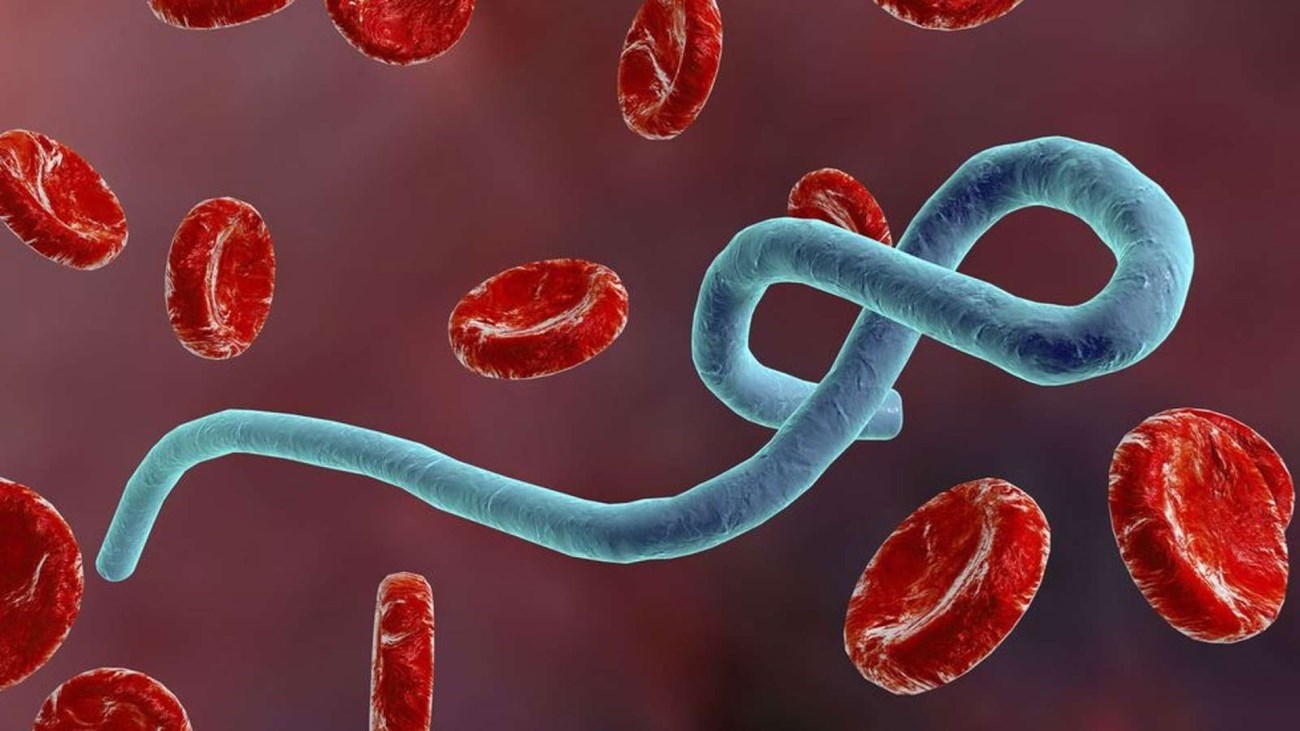
What is Ebola? Can it be treated?
Ebola, which causes a highly contagious hemorrhagic fever, remains a serious disease despite the development of modern vaccines and treatments, but they are only effective against the Zaire strain, which caused the largest epidemics on record.
The virus has claimed the lives of more than 15,000 people in Africa over the past fifty years.
The Democratic Republic of the Congo witnessed an outbreak of Ebola between August and December 2025, resulting in the deaths of at least 34 people. As for the most deadly epidemic in the country, it led to the death of about 2,300 people out of 3,500 infected between 2018 and 2020.
The African Union health agency, Africa CDC, declared a continent-wide “public health emergency” to confront the Ebola outbreak.
The agency said in a statement published on Monday evening that it had “officially declared the outbreak of Ebola virus disease of the Bundibugyo strain, affecting the Democratic Republic of the Congo and Uganda, a public health emergency” on the continent.