Parliament
09:29 PM | 02 Aug 2026
Morcos reveals the most prominent provisions of the new media law
Fady Mahouly
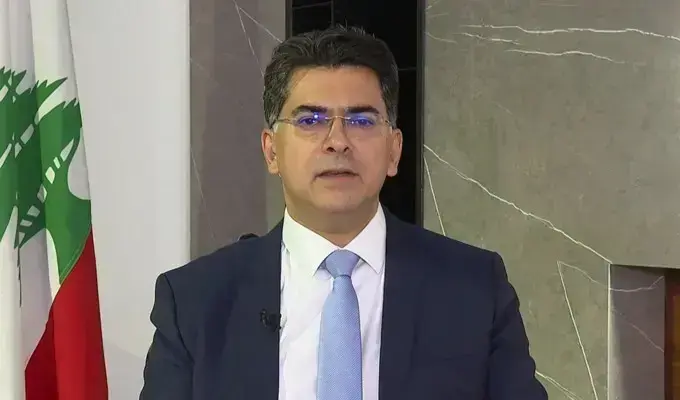
Information Minister Paul Morcos explained the provisions of the new media law draft, saying during an interview on LBCI, “The draft constitutes a fundamental step towards modernizing media legislation in Lebanon,” pointing out that the most prominent reforms included in the draft are:
Abolishing criminalization, prison sentences, and pretrial detention against media professionals while practicing their professional work in favor of focusing on financial fines, in addition to abolishing the Publications Court, ending the jurisdiction of the Military Court in media cases, and establishing courts specialized in media cases in the governorates.”
He stressed that he worked to “keep up with the discussions, advance them, and convey the observations of various media outlets to the House of Representatives, while reconciling them to improve the text before its approval,” adding, “The role of the Ministry of Information is limited to reconciling the various opinions and observations and submitting them to the House of Representatives.”
He pointed out that “the project enhances the independence of media institutions and prevents political and security interference in their work. It also regulates, for the first time, the work of websites within a clear legal framework,” stressing that “the project adopts the principle of ‘knowledge and news’ as an alternative to the prior licensing system for establishing media institutions, while maintaining legal standards.”
He also clarified the provisions of the new media law related to the penalties that may affect journalists and media organizations in the event of committing violations stipulated in the law, stressing that “there is no precautionary arrest against journalists or media professionals, contrary to the controversy that has been raised in the past period.”
He pointed out that “the Ministry of Information has no authority to investigate and punish everything related to social media, as this falls within the powers of the competent judiciary.”
Regarding the political aspect, especially the file of the Rome negotiations on August 4 between Lebanon and Israel, Morcos explained that “expanding or not expanding the Lebanese negotiating delegation is up to the discretion of His Excellency the President and comes based on the nature of the negotiating stages, which may not always be considered political negotiations, but rather are linked to military and technical arrangements with legal dimensions, which requires the presence of specialists and experts.”
He added: “Preparations for the negotiating rounds are taking place closely and at a high level, and the priority at the current stage is to stabilize the ceasefire and move forward in the experimental areas, leading to complete Israeli withdrawal from Lebanese territory beyond the borders.”